


Knowledge of the Pharmaceutical and Medical Devices Act is essential for managing advertising campaigns.
In this post, we'll mainly focus onThe Pharmaceutical and Medical Devices Act in Online Sales and Advertising ManagementI will provide a clear and easy-to-understand explanation of this topic.
Please feel free to use this as a reference.
What is the Pharmaceutical and Medical Devices Act?
What exactly is the Pharmaceutical and Medical Devices Act?

In advertising management, the main focus is on “Ensuring Quality, Efficacy, and Safety"with the aim of"
Regulations are in place.
So, why is it necessary to comply with the Pharmaceutical and Medical Devices Act?
Imagine an advertisement that uses exaggerated claims in violation of the Pharmaceutical and Medical Devices Act.

Advertisements can give consumers the wrong impression of a product, can't they?
As such, consumersExaggerationIf you end up buying something due to a misunderstanding,
It is also possible that this could affect your health.
No matter how appealing a product may be, if it violates the Pharmaceutical and Medical Devices Act,
Administrative GuidanceやProduct RecallIn response to,
This will have a significant impact on operations.
Effective August 1, 2021, administrative fines for violations of the Pharmaceutical and Medical Devices Act will take effect.
The penalty applies to false or exaggerated advertising, and the fine is 4.5% of sales.
Make sure you have a solid understanding of the Pharmaceutical and Medical Devices Act, and
Let's make sure your ad campaigns run smoothly.
Eligible Products
The following four products are subject to the Pharmaceutical and Medical Devices Act.
------------------
"Medicines"
"Quasi-Drug"
"Cosmetics"
"Medical Devices"
------------------
These products are classified differently under the Pharmaceutical and Medical Devices Act, and
Scope of Claimed Effects and BenefitsThey are also different.
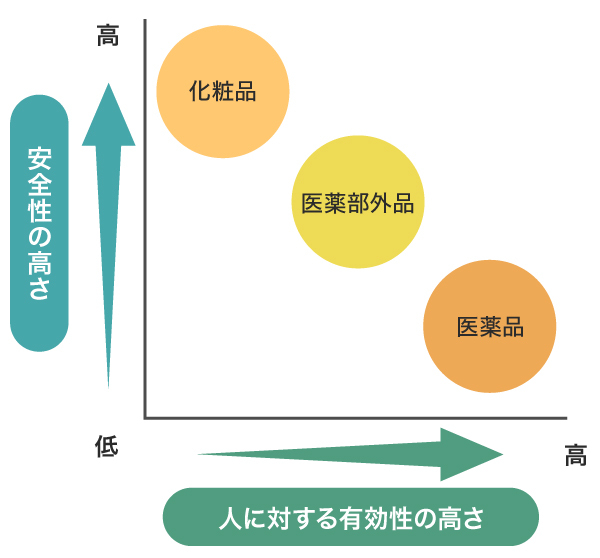
(See:Japan School Health Association)
Since health foods are classified as “food,” they are not covered by the Pharmaceutical and Medical Devices Act.
There are two main rules regarding health foods:
------------------
"Act on the Display of Prize Information"
"Health Promotion Act"
------------------
Although it is not subject to the Pharmaceutical and Medical Devices Act,
Usage、Dosage、Indications and EffectsSince writing this would violate the Pharmaceutical and Medical Devices Act,
Please be careful.
Next, I’ll explain each type in detail.
Please familiarize yourself with the expressions to avoid, and be sure to make use of the recommended expressions in your daily work.
About Medicines
What Are Pharmaceuticals?

"Pharmaceuticals" means "Intended for use in the diagnosis, treatment, or prevention of diseasesThe intended purpose」。
This includes eye drops, hair growth treatments, cold medicine, and other items.
Acceptable Expressions
Pharmaceuticals are,"Prevention" and "Treatment"You can describe effects and benefits such as these.
Expressions that can be used as slogans include:Within the scope recognized by the Ministry of Health, Labor and Welfare for its effects and efficacySo please be careful.
Example)
"High blood pressure caused by ○○"Improvement"You can do that."
"Lifestyle-related diseases"Prevention"To ○○!"
Prohibited Expressions
Effects and indications not recognized by the Ministry of Health, Labor and WelfareExpressions regarding this are not allowed.
It is necessary to understand which requirements the product meets before making any claims.
About Quasi-Drugs (Medicated Cosmetics)
What Are Quasi-Drugs?
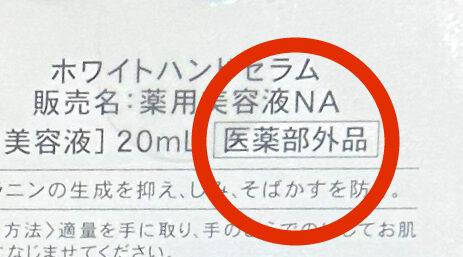
"Quasi-drugs" are,
"It is not actively used for treatment, and
Discomfort such as nausea, heat rash, skin irritation, etc.Prevention...used for that purpose.
In addition, for bad breath, body odor, hair loss prevention, hair growth, hair removal, etc.For cosmetic purposesUsed for . Its effects on the human body areEasing"such a thing."
(Source:Japan School Health Association)
Medicated CosmeticsIt is classified as a quasi-drug.
Medicated cosmetics are products that, in addition to the basic functions of cosmetics—such as moisturizing—contain ingredients effective in treating skin problems.
When selling or advertising a product as a quasi-drug,
Approval by the Minister of Health, Labor and Welfareis required.
Acceptable Expressions
The claimed benefits and effects areDetailed regulations for each product...is being done.

When including a call to action in a tagline,
*Using symbols such as *, etc.NoteLet's add it.
Example)
"A cream with skin-brightening effects (*)!"
(*) Inhibits melanin production caused by sun exposure and prevents dark spots
Prohibited Expressions
"Prevention"や"Treatment"Expressions that refer to *are*,
Since it falls outside the scope of quasi-drugs, it is generally not permitted for use.
However, products that have been approved may include statements regarding “prevention.”
Example)
"Dark spots and freckles..."Delete」
About Cosmetics
What Are Cosmetics?

"Cosmetics" are,
"To cleanse and beautify the human body, enhance its appeal, alter one's appearance, and
Or to keep the skin or hair healthy,
A substance intended to be applied to the body by rubbing, spraying, or other similar methods, and
The effects on the human body areEasing"that sort of thing."
(Source:Japan School Health Association)
Acceptable Expressions
The Effects of MakeupSo, the expression "makes your skin whiter" is acceptable.
Example)
"Foundation that makes your skin look fairer when you apply it"
"Makes dark spots less noticeable"
The scope of effects and benefits that may be claimed for cosmetics is,
There are 56 items listed in the “Standards for Appropriate Advertising of Pharmaceuticals and Related Products.”


Prohibited Expressions
Expressions such as “skin whitening” and “anti-aging care” are not allowed.
Also,Claims of efficacy that suggest the product is a pharmaceutical drugYou cannot do that.
Example)
"Use XX and your skin will become fairer too!"
About Medical Devices
What is a medical device?
"Medical device" means,
"Used for the diagnosis, treatment, or prevention of diseases in humans or animals,
or is intended to affect the structure or function of the human or animal body
"Machinery, equipment, and the like (excluding regenerative medicine products, etc.) as specified by Cabinet Order."
(Source: Japan Medical Device Industry Federation)
Acceptable Expressions
Just like with pharmaceuticals,
Within the scope recognized by the Ministry of Health, Labor and Welfare as having efficacy and therapeutic effectsAdvertising is permitted on [...].
Prohibited Expressions
Statements regarding unapproved effects or benefits are not permitted.
About Health Foods

As I mentioned at the beginning, although health foods are less subject to the Pharmaceutical and Medical Devices Act,
These are issues that require corrective action.
There are four types of health foods, and the claims that can be made about them differ.
Let's understand the characteristics of each and learn how to express them appropriately.
Types of Health Foods
1. Health Foods
Foods intended to maintain and support health.
User ExperienceYou can only write that.
2. Foods for Specified Health Uses (Tokuhō)
On the packageFood for Specified Health Uses LogoFoods that have this label.
This refers to items that are individually authorized by each country.
"Maintaining and Promoting Health"Or"Functions that reduce the risk of disease"You can write about it.
3. Foods with Nutritional Functions
On the packageNutrition-Functional Food MarkFoods that have this label.
Without notifying the government,In-house certificationrefers to what has been done.
You can include information regarding the functions specified by the government.
4. Foods with Functional Claims
On the packageLabeling of Foods with Functional ClaimsFoods that contain [...].
This refers to products for which functional claims may be made upon filing a notification with the Consumer Affairs Agency.
Based on scientific evidence"Maintaining and Promoting Health"You can write about it.
Acceptable Expressions
The scope within which its functionality has been provenIn this context, certain types of labeling are permitted.
Example)
"XX for a Healthy Digestive System"
"△△: Recommended for People with High Blood Pressure"
Prohibited Expressions
Be sure to familiarize yourself with the expressions to avoid that are common to all four types of health foods.

You must avoid any wording that could be interpreted as referring to a pharmaceutical product.
6 Expressions to Avoid
Did you understand which expressions are acceptable and which are not for each product?
Next, I’ll introduce some common expressions to avoid.
What they have in common is"Expressions that may mislead users"...is not allowed.
This is the absolute basics of the Pharmaceutical and Medical Devices Act, so make sure you understand it thoroughly.
Unsubstantiated exaggerations
"~ will disappear (has disappeared)"
"~ will be cured (has been cured)"
"Prevents ~"
Basically, as described above,Expressions Related to Treatment and PreventionThat's not allowed.
However, as an exception, for pharmaceuticals and quasi-drugs,
Things with a basisIn that case, you can express it that way.
Also, avoid implying any specific effects or benefits.
Example)
✖ “XX brings out your skin’s natural power” (suggestion)
○ “XX supports your skin”
The Most Expressive
With regard to manufacturing methods for pharmaceuticals and other products, one must not use expressions that differ from the actual manufacturing methods or that are likely to give rise to a perception contrary to fact regarding their superiority.
(Source:Ministry of Health, Labor and Welfare)
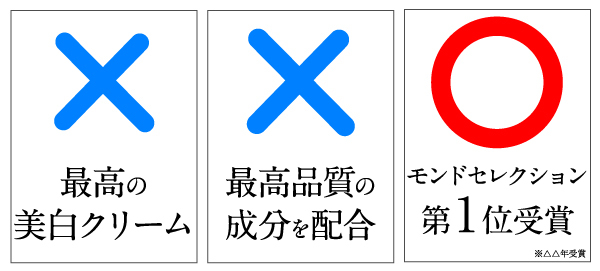
SuperlativeWording that refers to [...], etc., is generally not permitted.
In exceptional cases, expressions such as “No. 1 in sales” or “First Place in the △△ Competition” are,
Rational BasisIf that is the case, it will be accepted.
When including this information, be sure to add a note using an asterisk (*) or similar symbol.
Example)
✖ “The Finest Skin-Whitening Cream”
○ “Winner of the Monde Selection Grand Gold Award (*)”
(*) Winner of the △△ Award
Authorization

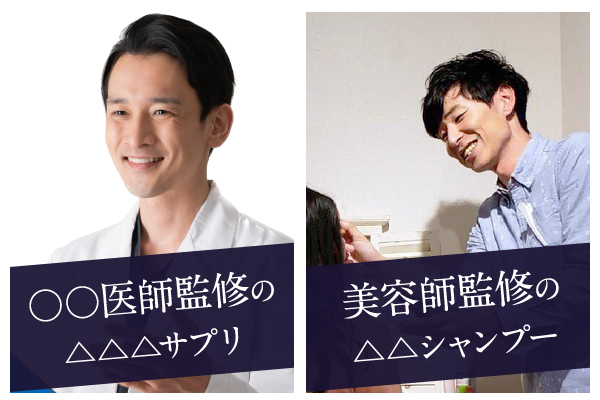
Healthcare professionals, barbers, hairdressers, hospitals, clinics, pharmacies, and other entities dealing with pharmaceuticals, etc.Advertisements must not claim that a government agency, school, or academic society—or any other organization that significantly influences public perception regarding efficacy and other effects—has designated, certified, recommended, endorsed, or selected the product.
(Source:Ministry of Health, Labor and Welfare)
When you find out that a product is recommended by an authoritative figure, such as a doctor, how does that affect your impression of the product?
I think many people would feel that if an expert says so, it must be a good product.
As such,AuthorizationIf we do that, it will have a significant impact on consumers.
Even if it is true that a recommendation was made, we generally cannot include that information.
Example)
✖ “Supplements developed under the supervision of doctors,” “Shampoos endorsed by hairstylists”
○ “Leave the follow-up care for supplements to the experts”
Safety Guarantee
With regard to the efficacy, effects, or safety of pharmaceuticals and other products, one must not use expressions that specify particular efficacy, effects, or safety and imply a guarantee that they are certain.
(Source:Ministry of Health, Labor and Welfare)
It is definitely safeIt is prohibited to make such statements.
This, too, can lead to misunderstandings on the part of consumers.
Example)
✖ “It has been tested repeatedly, and its safety is guaranteed.”
○ “We conduct repeated tests and strive to ensure safety.”
Customer Reviews Describing the Product's Effects and Benefits

(5) User Testimonials, etc.
Examples of thank-you letters and messages of appreciation from loyal users, as well as comments such as “I use it too.”, etc.
Advertisements based on personal experiences or testimonials cannot serve as objective evidence, and
On the contrary, it may mislead consumers regarding efficacy, effects, or safety
Because there is a risk, this must not be done except in the following cases.
In any case, please be careful not to use overly strong or guarantee-like language....① When describing the user experience in advertisements for eye drops, topical medications, cosmetics, and similar products
However, advertisements that specifically emphasize only the user experience may mislead consumers regarding the intended use of the product.Do not do this, as it may mislead the target.
② When a celebrity simply explains or demonstrates a product
(Source:Ministry of Health, Labor and Welfare)
Have you ever seen an ad that includes customer reviews?
Actually, the Pharmaceutical and Medical Devices Act also applies to word-of-mouth reviews.
Those that mention efficacy and benefitsDo not include this.
User ExperienceIf it describes [...], it can be included.
Example)
✖ “See results in just one month!”
○ “Easy to carry around and easy to drink!”
Use of Clinical Data

(3) Examples of Clinical Data, etc.
In advertisements intended for the general public, citing clinical data or case studies may fail to provide consumers with sufficient explanation, and
As this may lead to misunderstandings regarding efficacy, effects, or safety, it should generally not be done.
(Source:Ministry of Health, Labor and Welfare)
When you look at clinical data, you tend to assume it’s reliable, don’t you?
Under the Pharmaceutical and Medical Devices Act,Clinical Dataprohibits such descriptions on the grounds that they mislead consumers.
Example)
✖ “Changes in Hair Volume Resulting from Continued Use of ○○”
○ Do not use clinical data
4 Tips for Complying with the Pharmaceutical and Medical Devices Act
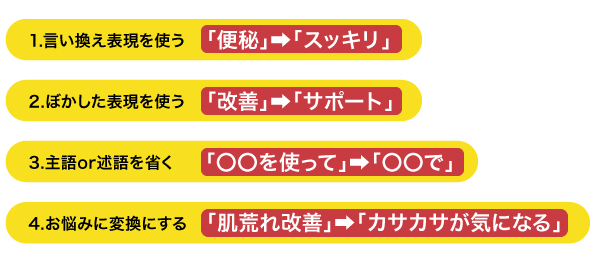
While it is important to comply with the Pharmaceutical and Medical Devices Act when managing advertisements,
Avoiding promotional language for products prevents consumers from understanding their appeal because
That's such a waste, isn't it?
Here are some techniques for conveying the appeal of your products while complying with the Pharmaceutical and Medical Devices Act.
Please be sure to take advantage of this.
Use alternative phrasing
When managing advertisements in compliance with the Pharmaceutical and Medical Devices Act, it is important to
「Phrasing Patterns"Creating that within yourself."
"Smooth," "fluffy," "silky," and other
OnomatopoeiaUsing it is also effective.
----------------------------------------
Example)
"For Those Who Struggle with Constipation Every Morning"
→ “Every morning’sRefreshing"For Those Who Are Struggling"
"At ○○,Smooth"For Beautiful Hair!"
----------------------------------------
Use vague language
As mentioned above, cosmetics and health supplements are
It is not acceptable to directly state the product's effects or benefits.
Therefore,After softening the wordingLet's think of a way to express this that resonates with consumers.
----------------------------------------
Example)
"Improves the scalp environment"
→ “The scalp environment…”Support (Encouragement)"I'll do it."
----------------------------------------
Omitting the subject or predicate
Omitting the subject or predicateI also recommend this.
By not making it clear what exactly is being discussed,
This allows you to avoid directly stating the effects and benefits.
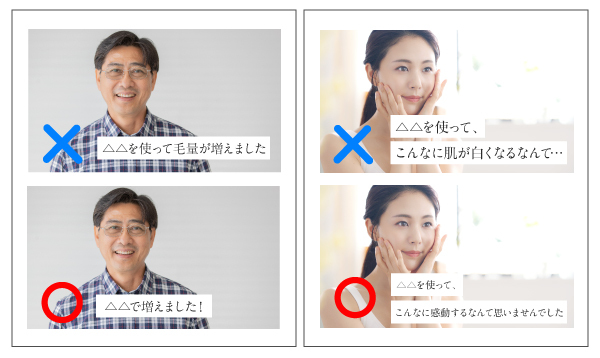
<主語>
"I've gained more hair volume by using XX!"
→ “It’s gone up at 〇〇!”
In this case, it could also be interpreted as “my confidence has grown,” so,
Multiple meaningsThat's a possibility, isn't it?
<述語>
"I can't believe my skin has gotten this fair just by using XX..."
→ “I never would have thought using 〇〇 would lead to this…”
In this case,Does not directly describe physical changesThat means...
Convert to a problem
Tailoring Product Benefits to Consumers' ConcernsReplacementLet's give it a try.
Furthermore, by rephrasing it as a question, rather than focusing on the effects and benefits,
Addressing Your ConcernsThis will lead to...
----------------------------------------
Example)
"Improving Skin Conditions"
→ “Have you been noticing dry, flaky skin lately?”
----------------------------------------
Summary
An understanding of the Pharmaceutical and Medical Devices Act is essential for online sales and advertising operations.
Phrasing PatternsCreate one for yourself, and
It would be great if we could put this into practice.
Be sure to bookmark this blog and check back regularly.
Hide&Seek, the author of this blog, is,
We are a company that provides advertising and e-commerce platform management services.
Thank you for reading to the end!